Price Upon Request
This piece is offered privately. Contact us for pricing, provenance, and to arrange a viewing.
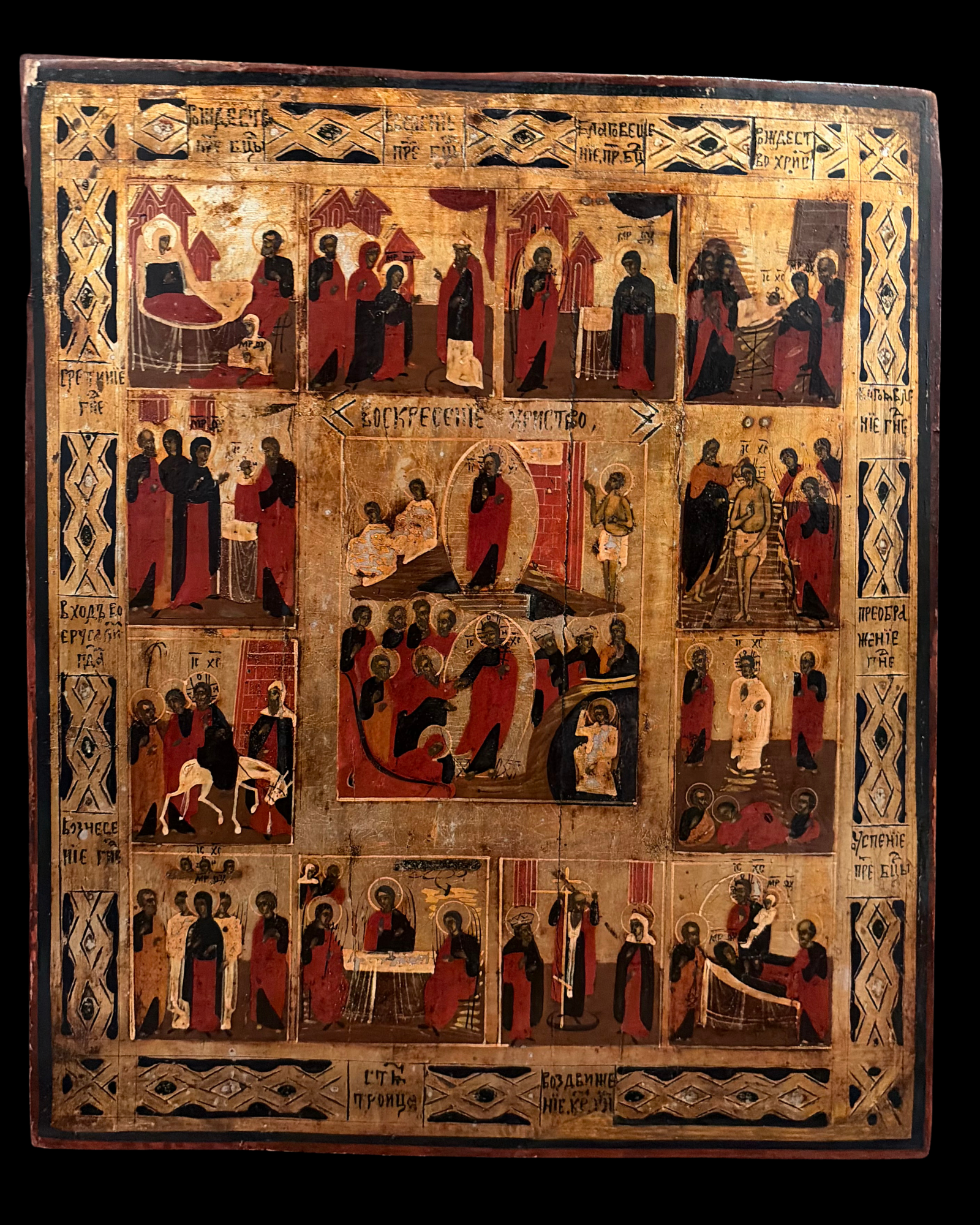
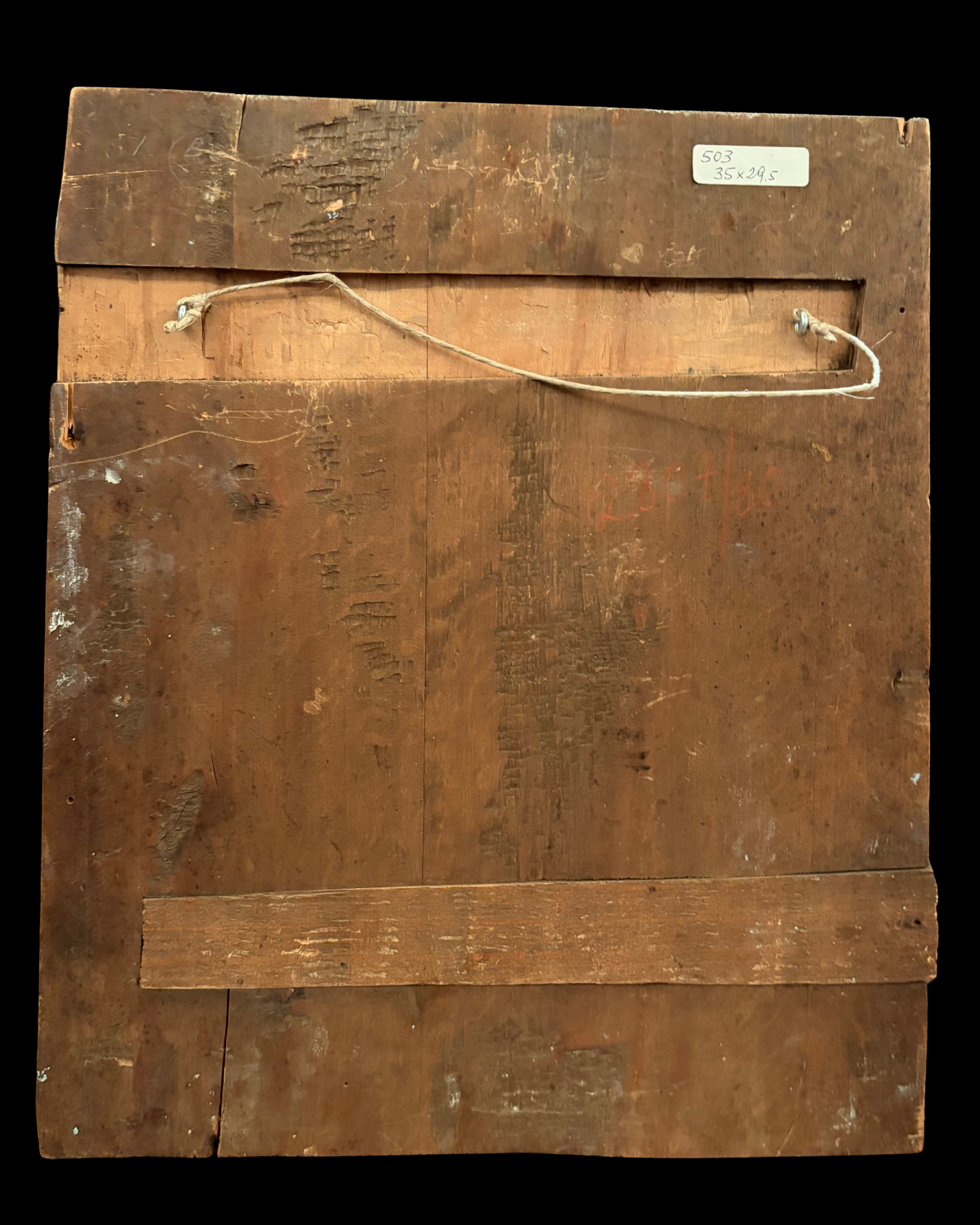
A remarkable early 19th-century Russian icon depicting the Twelve Great Feasts of the Christian liturgical calendar, arranged around a central representation of the Resurrection of Christ and His Descent into Hades. The elaborate composition brings together the principal sacred events associated with the lives of Christ and the Mother of God, including the Nativity, Annunciation, Presentation in the Temple, Baptism of Christ, Transfiguration, Entry into Jerusalem, Ascension, Pentecost, and Dormition of the Mother of God. At the centre, Christ appears triumphantly within a radiant mandorla, overcoming death and liberating the righteous from Hades. The surrounding biblical scenes, accompanied by traditional Church Slavonic inscriptions, create a richly detailed devotional composition reflecting the theological significance of the great feasts. Hand-painted in tempera on levkas on a traditional wooden panel, the icon is distinguished by its extensive gold-toned background, intricate geometric borders, and carefully arranged miniature narrative scenes. The expressive figures, stylized architectural settings, and finely outlined garments display the distinctive artistic character of traditional Russian icon painting. Deep red, black, ochre, and warm golden tones create a harmonious composition, while the repeating diamond-shaped ornamental patterns surrounding the sacred scenes provide an especially decorative architectural framework. The combination of numerous biblical episodes, delicate painted details, and traditional inscriptions reflects the rich storytelling tradition of historic Russian religious art. Attributed to the early 19th century, the icon retains its authentic historical character, displaying a naturally aged painted surface and pronounced period patina. The substantial wooden panel consists of joined boards reinforced by two traditional transverse battens on the reverse, showing considerable evidence of age, structural movement, and historical wear. The surviving gold-toned decoration, darkened painted details, aged inscriptions, and naturally worn surface contribute to its distinctive antique appearance. The extensive narrative composition and elaborate ornamental framework preserve the historical and artistic character of this traditional Russian Feast Cycle icon. Condition: Overall fair antique condition considering its attributed age, with extensive age-related surface wear, craquelure, scattered paint and ground losses, abrasions, and considerable deterioration to portions of the gold-toned background. Several of the smaller narrative scenes display natural darkening, reduced paint clarity, and localized losses, while the surrounding decorative borders show areas of wear and discoloration. The wooden panel exhibits visible structural movement, including board joints, localized splitting, scratches, and edge wear, with both transverse reinforcing battens preserved on the reverse. Evidence of historical conservation or localized retouching may be present. Despite these age-related characteristics, the principal biblical compositions remain recognizable, with the central Resurrection scene, surviving decorative details, and traditional ornamental framework maintaining the icon’s historical character and visual appeal.